
7 Protected Animal Species You May Find in DeBary
DeBary is home to some of Central Florida’s most unique and vulnerable wildlife. As the region continues to grow, our community needs to make sure the wildlife is protected, preserved, and understood. This article highlights seven protected animal species that play a vital role in maintaining the area’s ecosystem. By learning more about these creatures and understanding the laws designed to protect them, we can all play a part in preserving DeBary’s rich natural heritage for generations to come.

1) Gopher Tortoise

The gopher tortoise is a threatened species that lives in sandy dry soils but can also be found in pastures and urban areas. Gopher Tortoises live about 40-60 years in the wild; however, males mature around 9-12 years of age and females 10-21 years of age. During breeding season, the females will find a sunny and open location to create a burrow and nest for their eggs. The breeding season is between March and October, and the hatchlings will come out of their nests around August to November. Not only do they dig burrows for breeding, but they also dig to keep their species alive. Gopher tortoises spend up to 80% of their time digging burrows for protection from extreme temperatures, wildfires, predators, and droughts. Burrows aren’t just useful for the tortoises; once the gopher tortoise vacates the burrow, it then turns into shelter for other threatened species. Their burrows average at 15 feet long and about 6 feet deep, and they create multiple burrows throughout their life.
2) Indigo Snake
The indigo snake, often called the “lord of the forest,” is a large, non-venomous species in the Colubridae family. It’s easily recognized by its striking iridescent bluish-black scales and a

reddish to orange-brown head. Reaching lengths of up to 8.6 feet, the indigo snake is the longest native snake species in the United States. These snakes inhabit a variety of ecosystems, including longleaf pine Sandhills, pine Flatwoods, scrub pine areas, hardwood hammocks, and coastal dunes throughout Florida and southeastern Georgia. As a southeastern species, indigo snakes feed on a wide range of prey such as turtles, fish, frogs, lizards, small birds, mammals, and eggs. They also migrate seasonally between upland and lowland habitats. Much like gopher tortoises, indigo snakes seek underground shelters for protection, breeding, feeding, and nesting. In fact, they often occupy abandoned gopher tortoise burrows in Sandhill habitats. Unfortunately, indigo snakes are now considered an endangered species due to habitat loss, fire suppression, habitat fragmentation, and the decline of the gopher tortoise population.
3) Florida Scrub Jay

The Florida Scrub-Jay is a striking blue and gray bird found only in Florida, making it the state’s only endemic bird species. It lives in scrub oak, scrubby Flatwoods, sand pine scrub, and coastal scrub. Known for its intelligence and complex social behavior, the Florida Scrub-Jay often lives in family groups and cooperatively raises young. They use their offspring from previous breeding seasons to help with family predator defense, territory defense, and feeding the new hatchlings. When a threat is seen, the scrub jay will give an alarm call, and the others will take cover. Sadly, due to habitat loss, Fire suppression, Hawks, feral cats, and other predators, its population has been declining, and it is now listed as a threatened species. Conservation efforts are ongoing to protect this unique bird and its specialized habitat.
4) Florida Panther
The Florida Panther is a rare and endangered subspecies of cougar that lives in the forests, hardwood hammocks, pinelands, and swamps of Florida. They prey on a variety of animals such as rabbits, whitetail deer, hogs, and birds. It is one of the two native cat species in Florida, with the other being the bobcat. Recognizable by its tawny coat and slightly smaller size compared to other cougars, it plays a vital role in maintaining the balance

of its ecosystem. Florida panthers nearly became extinct due to habitat loss, hunting, and vehicle collisions. They also suffer from a genetic stagnation, which increases the chances of them getting diseases and health issues. However, the Florida Panther population has slowly increased thanks to conservation efforts and protected areas like the Everglades. Even with the efforts, Florida panthers remain critically endangered. Continued protection is essential to ensure the survival of this iconic Florida predator.
5) Sandhill Cranes
Sandhill cranes are large, elegant birds known for their striking appearance and distinctive trumpeting calls that can be heard from miles away. Standing up to four feet tall with long legs and necks, they are easily recognized by their gray body and a red patch of skin on
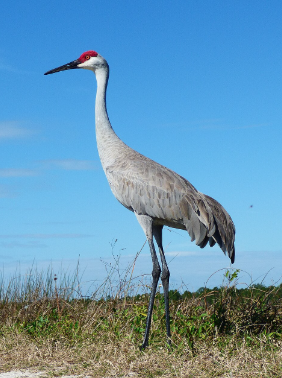
their foreheads. These cranes are highly social and often seen in flocks, especially during migration when they gather in the thousands at key stopover points. Sandhill cranes perform elaborate courtship dances involving bowing, leaping, and wing-flapping, which strengthen pair bonds and are a captivating sight. They nest in wetlands and prefer open habitats. If you keep an eye out, you can see them all around DeBary! Sandhill cranes feed on a varied diet of plants, insects, and small animals. Known for their grace and resilience, sandhill cranes are listed as threatened and are protected due to near extinction from hunting and habitat loss. This led to multiple federal protections, such as the Migratory Bird Treaty Act.
6) Manatees
Manatees, often called "sea cows," are gentle, slow-moving marine mammals that inhabit warm coastal waters, rivers, and springs, primarily in Florida and parts of the Caribbean. You can find manatees in the St. Johns River and in Blue Springs State Park. With their large, rounded bodies, paddle-shaped tails, and wrinkled, whiskered faces, manatees have a calm and friendly appearance. Even though they are friendly, it is prohibited to touch manatees due to their endangered status. Manatees are herbivores, feeding mainly on seagrasses

and aquatic vegetation, and can eat up to 10% of their body weight in plants each day. Despite their size, manatees are graceful swimmers, often gliding slowly or floating near the surface. Unfortunately, they face several threats, including boat strikes, habitat loss, and cold temperatures. Conservation efforts have helped improve their status in recent years, but these gentle giants remain vulnerable and continue to need protection to ensure their survival in the wild.
7) Wood Stork
The wood stork is a large wading bird native to the southeastern United States, Central America, and parts of South America. It is the only stork species that breeds in North America. Wood storks are easily recognized by their long legs, white plumage, and bald, dark gray heads. They typically live in wetlands, swamps, and marshes, where they feed on fish, frogs, and other small aquatic animals. Unlike many birds that hunt by sight, wood storks use a “tactile” feeding method, snapping their bill

shut as soon as they sense prey in the water. These birds rely on seasonal changes in water levels to concentrate fish, making healthy wetland ecosystems crucial for their survival. Although once listed as endangered in the U.S., conservation efforts have helped their population recover, and they are now considered a threatened species.
What Is DeBary Doing to Protect Its Wildlife?
To address this, the City of DeBary has not only implemented measures to safeguard local endangered and threatened species, but has also purchased key properties to preserve them in their natural state for wildlife to continue to enjoy.
Property Preservation:
In the last three years, the city has purchased three parcels of land totaling 227 acres that otherwise could have been developed. 170 acres of this (Alexander Island) was initially designated for the construction of 64 homes. Recognizing the expansive wildlife residing here, DeBary proactively sought and secured grants to purchase this property and transform it into a future passive park. The two other parcels were purchased to prevent development on wetlands and environmentally fragile acres. Learn more about recent wetland preservation in DeBary.
While the City cannot purchase every piece of land to preserve vital ecosystems, DeBary has established important protections for wildlife in areas that may be developed.
(Learn about the DeBary Land Bank: A proposed property tax that would solely be used to purchase properties for Preservation, Conservation, and Redevelopment)
Rules & Regulations to protect wildlife:
Before any development begins on a vacant property in DeBary, an Endangered and Threatened Species Report is required to ensure that local wildlife is protected. Property owners must hire a qualified environmental consultant to conduct the necessary surveys and assessments before building. If the consultant determines that a protected or endangered species is present on the site, the next step is to obtain the proper permits from the Florida Fish and Wildlife Conservation Commission (FWC) to ensure the animals are safely and legally relocated. Protecting these species isn’t just a legal requirement; it’s a critical part of preserving DeBary’s natural environment. By supporting conservation efforts and staying informed, we can all play a role in protecting Florida’s incredible wildlife. If you see a protected animal in need or have any concerns, reach out to FWC right away. To learn more about Florida’s protected species or wildlife, visit the Florida Fish and Wildlife Conservation Commission website.


Comments